

The signature selling point of premium thin‑skin shumai lies in its translucent wrapper. After steaming, fillings can be faintly seen through the thin dough sheet, which separates high‑end dim‑sum from mass‑produced ordinary shumai. Many frozen‑food processors and central kitchens meet a common challenge when deploying the GQ-2-JB automatic shumai machine. If wrappers are made thin enough for translucency, tearing and edge cracking frequently occur during production. If tension is raised to avoid breakage, wrappers turn thick, losing the desirable translucent look with stiff pleats, failing quality requirements for retail and export orders.

This issue seldom comes only from dough formulation. It mostly depends on the equipment's capability of dynamic wrapper‑stretch control. Conventional shumai machines run pressing rollers with fixed unified speed. Tension stays constant through rolling, conveying and forming. Minor fluctuation in gluten performance or wrapper moisture will cause visible defects on finished products. To steadily produce thin yet intact translucent shumai, forming equipment must implement segmented wrapper‑stretch management covering rolling, conveying and forming phases.
Three core technical points for wrapper‑stretch control of thin‑skin shumai equipment
1.Rolling stage: independent servo speed regulation for controlled initial stretching
The GQ-2-JB thin‑skin shumai forming unit thins wrappers progressively rather than squeezing dough thin in one heavy pass. Gluten ductility is released gradually without breaking gluten fibers, lowering tearing risk in subsequent forming. Parameters can be quickly modified for glutinous‑rice shumai, shrimp shumai and other recipes with consistent wrapper thickness.
2.Transition conveying section: real‑time tension compensation to eliminate extra pulling stress
Wrapper transfer from rolling station to forming station is where invisible pulling damage most often happens. Built‑in photoelectric sensing tension‑compensation mechanism dynamically fine‑tunes conveyor speed responding to actual wrapper condition. Extra pulling stress during transportation gets eliminated. Even during long‑hour continuous mass‑production, uneven thickness fluctuation is minimized, ensuring every wrapper entering forming dies stays uniform.
3.Folding‑forming station: flexible forming module to reduce local instant stretching
Most shumai wrapper rupture does not take place in rolling, but the moment dies close and gather pleats. The flexible forming module on GQ-2-JB shumai machine applies progressive force while gathering pleats, avoiding sharp local pulling force. Wrappers receive moderate stretching without over‑thinning. It delivers neat handmade‑style pleats while preserving translucent visual effect. Open tops keep tidy after forming, and wrapper breakage rate remains low after steaming.
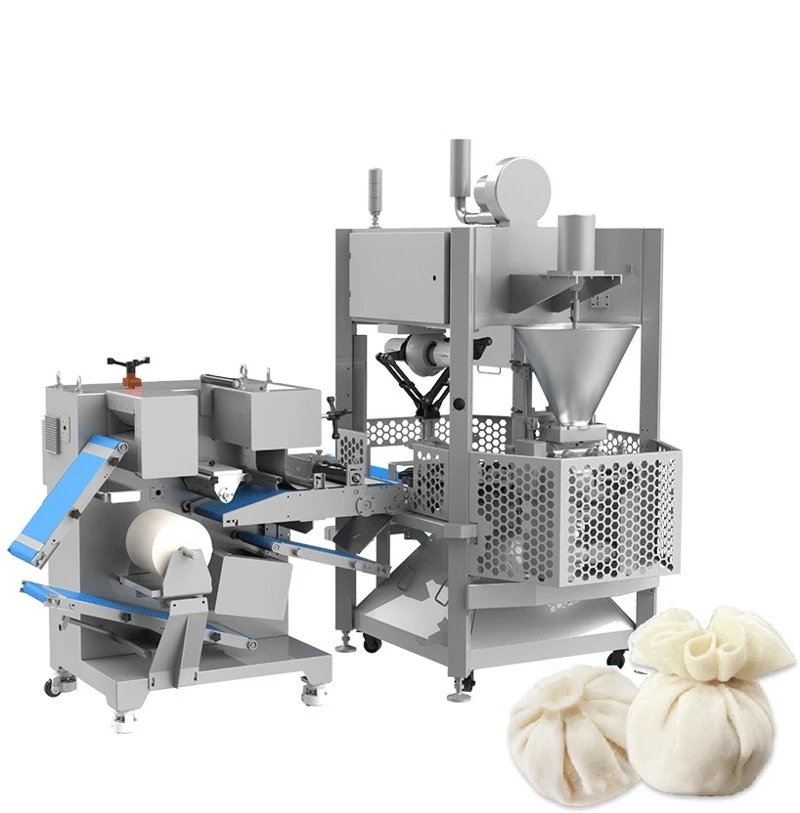
Practical production‑line benefits
- Stable premium‑grade appearance to support differentiated market positioning: Reliable translucent thin‑skin effect works well for high‑end Cantonese dry‑steamed shumai and export‑oriented Philippine siomai. Uniform finished appearance cuts manual sorting work for defective products.
- Flexible integration for new‑line setup and legacy‑line upgrade: The GQ-2-JB automatic shumai machine can connect with vacuum dough mixers for pre‑processing and match automatic tray‑arranging machines downstream. A full‑flow shumai automation line is realized: dough mixing → wrapper & forming → auto‑traying → quick‑freezing. Existing factories complete retrofitting without heavy civil construction. Turn‑key customized layout, overseas on‑site commissioning and 24‑hour online after‑sales support are available for food manufacturers across Russia, Australia, Southeast Asia and other global markets.
- Lower raw‑material waste and less dependence on skilled chefs: Servo‑based wrapper‑stretch control eases dough‑formula tuning and reduces reliance on experienced dim‑sum artisans. Raw‑material loss from wrapper tearing is reduced while quality remains stable during extended production runs.
Closing thoughts
Translucent thin‑skin shumai cannot be achieved simply by rolling dough sheets thinner. It requires refined full‑process tension management over wrapper stretching across rolling, conveying and forming phases. Every stress point should be properly managed to achieve "thin without rupture, translucent without cracking". If buyers only focus on production speed and overlook wrapper‑stretch performance, factories will easily fall into a dilemma: high reject rate for translucent products, or thick wrappers for low breakage.